
Postgraduate Diploma in Development Finance
Building Africa's leaders in sustainable finance
Finance Africa's Sustainable Future
Africa's future will be shaped by those who can mobilise capital at scale, and in ways that are sustainable and inclusive. Meeting that challenge takes a new kind of finance professional: one who moves fluently between the worlds of finance and sustainability, and who can design solutions equal to the ambition of the continent.
The UCT GSB Postgraduate Diploma in Development Finance has been fully redesigned around the practice of sustainable finance, and is built for existing and emerging leaders who want to drive that change. Whether your background is in banking, investment, law, engineering, the public sector, or environmental sciences, the programme equips you to bridge these worlds and lead the transition towards more resilient systems, markets, and institutions.
You will build the scientific literacy, regulatory fluency, and financial expertise to design credible, context-driven solutions to Africa's most pressing challenges. You will graduate ready to deploy capital where it matters most, and to use that expertise as a springboard for the next stage of your career.
This NQF Level 8 qualification is delivered in a blended format: intensive in-person blocks in Cape Town alongside structured online learning. This way you can study while you work and apply your learning immediately.
Application deadlines
| Round | Submit by | Decision by |
| Early Applications | 15 August 2026 | 15 September 2026 |
| General Applications | 15 September 2026 | 1 December 2026 |
| Late Applications | 31 January 2027 | 28 February 2027 |
INNOVATIVE TEACHING
Designed for working professionals, this part-time programme offers flexible online learning, empowering you to advance your career while making a real-world impact.
Teaching on the Postgraduate Diploma in Development Finance draws heavily on case study analysis with minimal exploration of theoretical concepts.
Insights based on 2025 curriculum
Programme Information
Curriculum Overview
The programme is structured around four modules, covering three core courses and a capstone project.
Module 1
Adaptive Leadership for Sustainable Finance
This module introduces the interdisciplinary foundation needed to understand, analyse, and manage the socio-ecological challenges shaping Africa's future. It covers key topics including climate change and biodiversity, Earth system interdependencies and the energy transition, the legal dimensions of climate change, the geopolitics of climate and resources, and the implications for human rights and inequality. Students build the leadership capabilities to analyse these interdependencies, anticipate conflicts and trade-offs, manage systemic risks and opportunities, and lead change.
Module 2
Sustainable Markets & Capital Mobilisation
This module develops the technical skills required to mobilise capital for sustainable development across African markets and asset classes. Students learn to evaluate and apply the financial tools and strategies most relevant to sustainable finance. From financial instruments and their use cases, to valuation techniques and financial risk modelling, to blended finance, project finance, and public-private partnerships, students gain the financial acumen to structure and deploy capital where it is needed most
Module 3
Managing Non-Financial Risk and Innovating for Systemic Impact
This module equips students to identify, measure, and manage non-financial risks while designing financial solutions that create measurable environmental and social impact. Students explore topics such as ESG integration and stewardship, sustainable funds and impact investment, outcomes-based finance, and the application of AI and data analytics to support decision-making and impact measurement.
Module 4
Capstone Project
The Capstone Project challenges students to apply the knowledge and technical skills gained throughout the programme to a real-world sustainable finance challenge. Students develop an integrated solution that moves sustainable finance from principle to implementation.
Entrance Requirements:
- An NQF level 7 qualification.
- A minimum of one year of relevant work or internship experience.
Who should apply:
- The PGDip in Development Finance is for professionals who want to deepen their impact through financial strategy and insight.
- It is ideal for those working at the intersection of finance, policy, and sustainability who want to build practical tools and broaden their influence.
Timing & Costs

Formats & Dates
The UCT GSB PGDip in Development Finance comprises six compulsory courses over a 9 month period. Learn more about the UCT GSB PGDip in Development Finance.


Funding
We understand that funding your studies can be a challenge. While we do not offer scholarships for this programme, explore funding options available to PGDip candidates.
What our students say
Why Choose the PGDip in Development Finance at the UCT GSB
Hybrid Skill Set The Market Needs
Industry consultation points to strong, growing demand for professionals who can bridge finance and sustainability. You'll graduate fluent in both, combining financial rigour with scientific literacy and systems thinking.
Applied Capstone Project
You'll finish by designing or structuring a real sustainable finance solution - a blended finance deal, a labelled bond, an AI-driven data tool, or a capital-mobilisation strategy - demonstrating how you move sustainable finance from principle to implementation.
Rooted in Africa, fluent in global capital
Built around the continent's markets, development priorities, and realities, while grounded in the frameworks that increasingly govern capital worldwide. You'll learn to mobilise capital in the most complex markets for positive impact.
An interdisciplinary cohort that becomes a network
Learn alongside experienced professionals and faculty from across disciplines. The diversity of the room is part of the education. You'll build cross-sector relationships that outlast the programme.
FREQUENTLY ASKED QUESTIONS
It is ideal for graduates or professionals aiming to work in financial institutions, government or NGOs promoting sustainable development and resilience in emerging markets.
This programme is for you, if you are:
- Working in or aspiring to work in sustainable finance
- A Finance professional in a DFIs, banks, and in an asset management or investment role• Public officials working in Agriculture, Forestry, Fisheries and the Environment, Health, Water and Sanitation, Electricity and Energy, Finance and those managing green infrastructure or economic planning
- An NGO and donor programme leads managing sustainability funding
- A consultant advising on growth, ESG, or renewable energy policy
- A future MCom applicant preparing for advanced study
- An Environmental, Law and Engineering specialists who want to understand how to leverage finance for sustainability and sustainable development mandates
Key takeouts of the programme:
- Gain critical skills to design and implement development projects that provide optimal and sustainable outcomes
- Acquire the ability to shape policies, programmes or innovations that catalyse finance for impact
- Invest in your career by making contact with industry professionals and developing an extended network of like-minded peers.
Three application cycles run between 15 July 2026 - 28 February 2027
Early application for early decision: 15 July 2026 - 15 September 2026
General application: 16 September 2026 – 30 November 2026
Late application: 1 December 2026 - 28 February 2027 (if places are still available)
Early applications are considered on a rolling basis, while all general application are considered at the closing date of the general application period. Late applications will only be open if there are places still available on the programme.
The programme has been designed to take into account the needs and constraints of working professionals, combining intensive in-person teaching over short periods (at the beginning and the end of the programme) with online classes in the late afternoon throughout the year. Courses require preparation ahead of time, group work and the submission of assignments.
- First Block: 05 - 16 April 2027 (In-person)
- Second Block: 11 May - 29 July 2027 (Online)
- Third Block:
- 17 August - 23 September 2027 (Online)
- 27 September - 1 October 2027 (In-person)
- 19 - 28 October 2027 (Online)
- Capstone Project: January 2028 - March 2028
Online classes are scheduled for 17:30 - 20:45 every Tuesday and Thursday.
Once you graduate from the UCT GSB you will join our alumni network which is a dynamic forum that comprises more than 23 000 past UCT GSB students in 68 countries worldwide.
Many of the UCT GSB’s alumni hold key positions in top companies or have started their own successful businesses.
Alumni play a vital role in supporting and encouraging more recent graduates to follow in their footsteps and UCT GSB students who find employment after graduation - particularly internationally - frequently do so through alumni contacts.
Courses are assessed by means of individual assignments, group assignments and class participation.
Students must attend all classes and group meetings (except where excused by the course convener), participate in course activities, and complete all assessments. In order to pass a course, students must obtain a DP as stated in the individual course outline as well as a minimum of 50% on individual assessment components.
Learn with the best
Our Internationally acclaimed researchers and teachers are all dedicated and gifted individuals who contribute directly to UCT GSB's reputation of excellence.

Programme Director

Programme Coordinator

Head: Recruitment and Admissions
TAKE THE FIRST STEP TODAY
Acquire new competencies and move your career to the next level!
UPCOMING EVENTS
Postgraduate Diploma in Development Finance (PGDIP DF) Info Session
Join us for an information session webinar about the UCT GSB Postgraduate Diploma in Development Finance (PGDip Dev Fin) at the UCT Graduate School of Business. Development finance has the power to address critical issues in emerging market economies.
Learn more RSVPIdeas Exchange

Development finance: how it works, where it goes, why it’s needed
Development finance addresses the failures or limitations of financial institutions such as commercial and investment banks. It is the invisible glue that connects public and private financing for projects that have social, economic and environmental outcomes.
Read Article
Export finance and development finance: How Acre Impact Capital is providing a nexus for convergence
Bringing development finance actors together is key to unlocking sustainable infrastructure growth where it is most vital.
Read Article
Trump’s USAID Freeze: A Wake-Up Call for South Africa’s Aid Sector
Kay Lala-Sides, an MPhil Inclusive Innovation graduate and PhD candidate at the UCT Graduate School of Business, examines the impact of Donald Trump’s suspension of USAID funding to South Africa and what it means for local organisations. With donor scrutiny increasing, she highlights the urgent need for stronger governance, strategic fund management, and accountable leadership to ensure aid effectiveness. Can South Africa’s social sector rise to the challenge?
Read Article
Breaking Barriers to Sustainable Finance
From navigating infrastructure challenges to meaningful finance, Bruce Jelley shares his experiences and insights about the MCom in Development Finance at the UCT Graduate School of Business, and how it is reshaping the way South African developers approach sustainability.
Read Article
The Development Activist
From humble beginnings to pioneering public leadership – Pati Kgomo's journey in development finance started with various positions in local government, progressed to position with the Development Bank of Southern Africa, and was honed by a Master’s in Commerce specialising in Development Finance at the UCT Graduate School of Business. Her remarkable achievements are a testament to the power of altruism, education, and a passion for sustainable development.
Read Article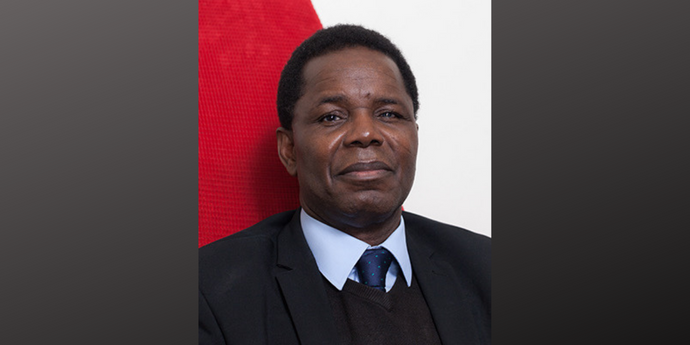
Professor Nicholas Biekpe inducted into prestigious UCT College of Fellows
Induction into the UCT College of Fellows is one of the highest accolades an academic staff member can receive. The fellowship is a reward to academic staff members for their years of commitment and dedication to their work.
Read Article
UCT team wins Oxford Map the System competition
Following their win at the regional final hosted by the University of Cape Town Graduate School of Business (UCT GSB), Finclusive was awarded first place for their project at the University of Oxford’s (UO) Map the System (MTS) competition, which took place from 17 to 20 June.
Read Article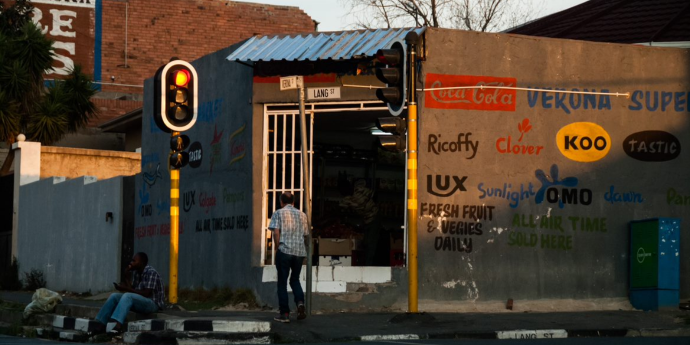
All eyes on DFIs as Africa looks to economic recovery
DFIs can be the catalysts for a stronger and more inclusive continent, but they need to expand their remit to include a focus on SMEs as a key priority.
Read Article
The role of development finance in rebuilding South Africa’s economy post-COVID-19
The global COVID-19 pandemic has set back developing countries especially, but it also offers an opportunity to rethink their development path.
Read Article
Coronavirus - an excuse to downgrade African countries deep into junk
A number of rating agencies have downgraded emerging market economies during the COVID-19 pandemic. Their actions have raised the question: why do so during a crisis?
Read Article
Three winning ways to tackle youth unemployment through development finance
Development finance is an underutilised tool that can be directed towards tackling South Africa’s unacceptably high youth unemployment beyond the remit of mainstream finance.
Read Article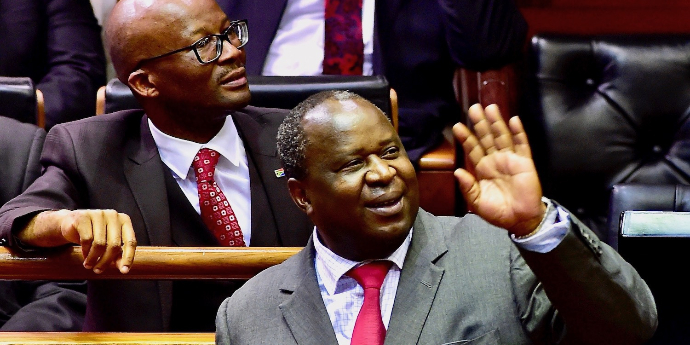
Development Finance Institutions (DFIs) can lead SA’s economic recovery
While government has identified DFIs as a key partner in delivering an economic turnaround — these institutions lack capacity and resources to do their jobs effectively. Fixing this will be a necessity.
Read Article